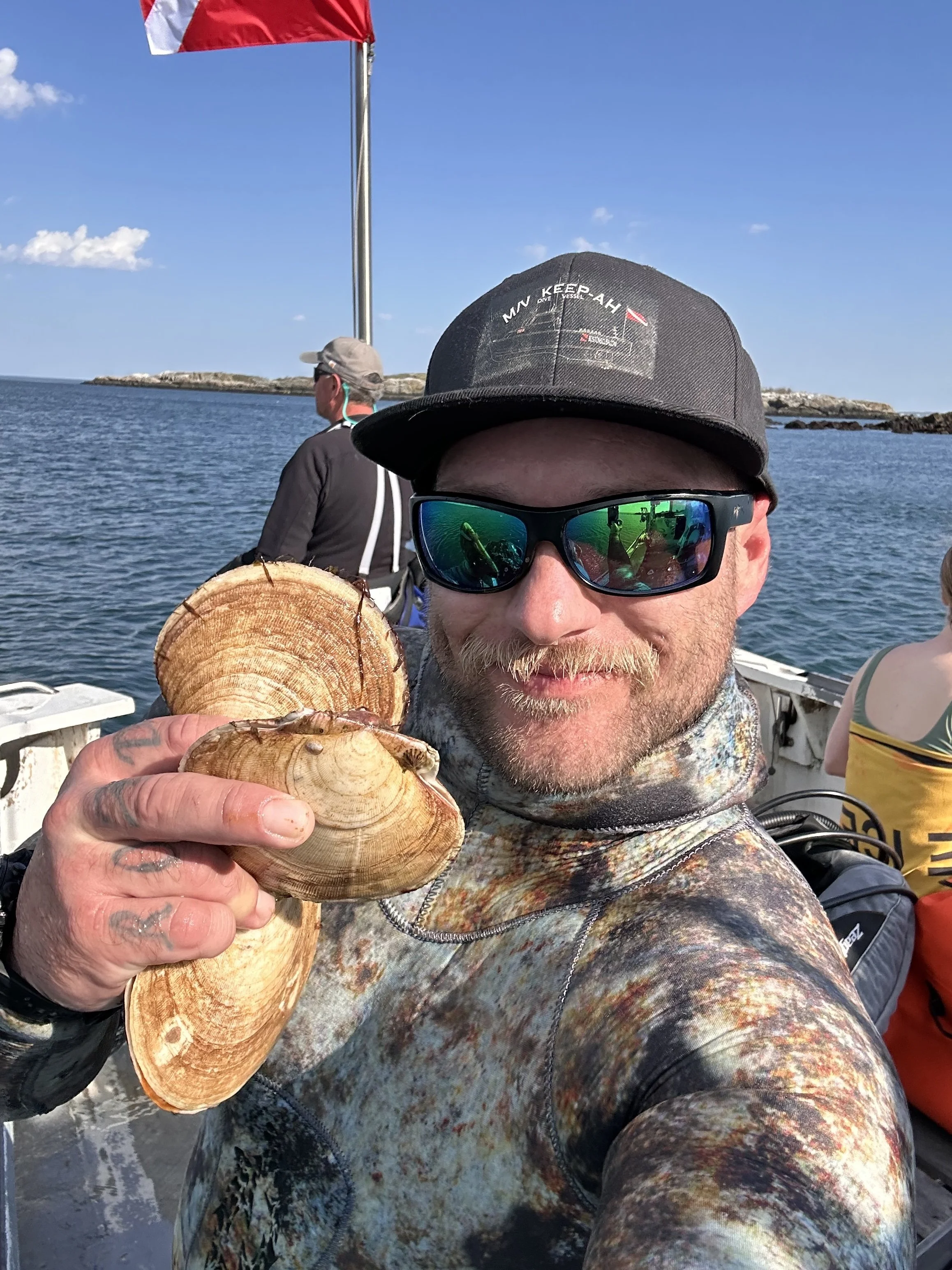
Scallop gives the Red Hake the shake.
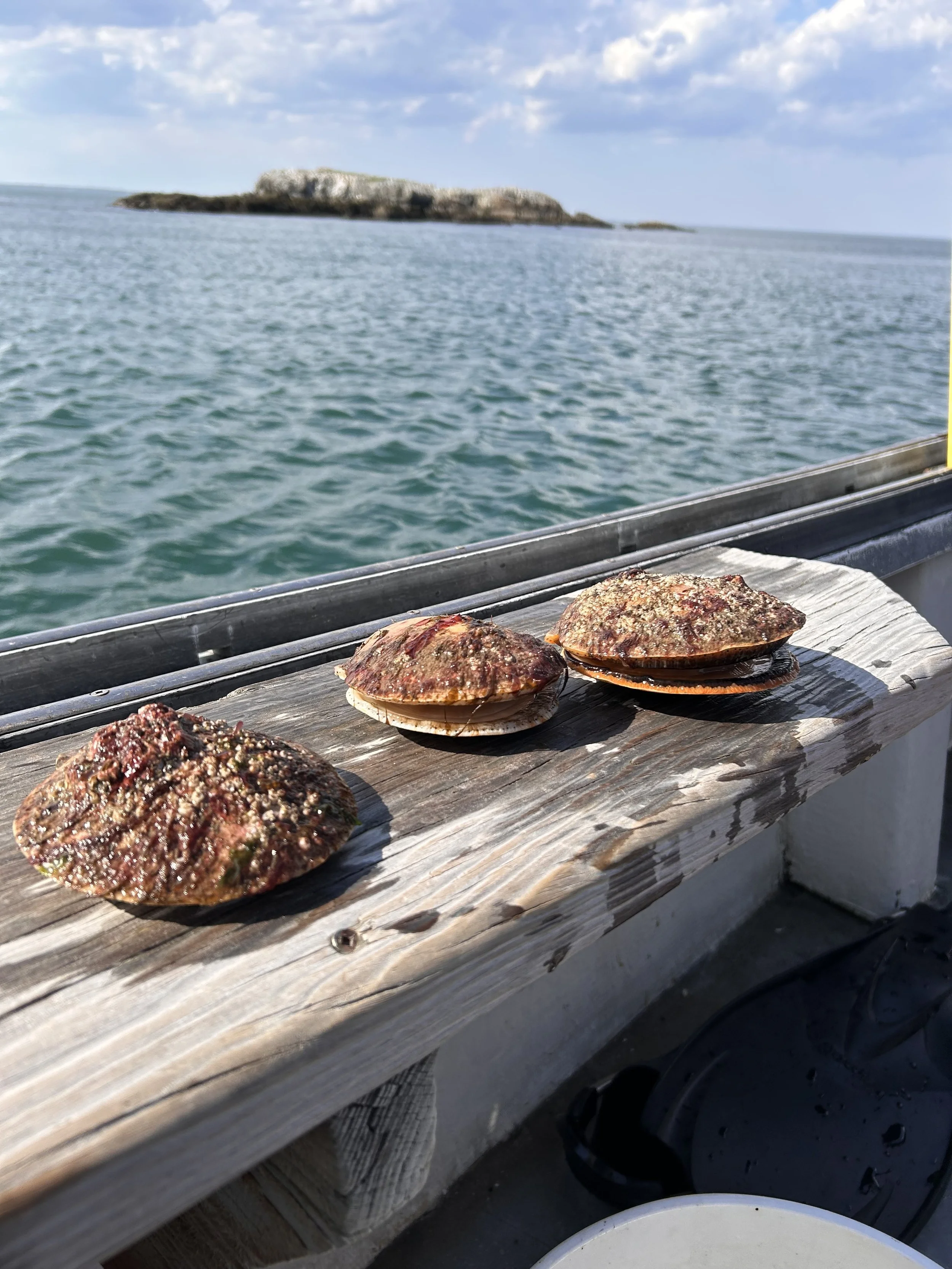
Out diving last weekend on the boat and we ended up finding some scattered and lost scallops that drifted away from their bed most likely in a winter storm. Scallops are great raw right out of the shell so grabbing a few when the opportunity presents itself is always a treat and worth the grab for a perfect snack from the salt. The scallops will make popping and pucker sounds as it opens up and looks at you with the hundreds of eyes lining the edge of the shell and every so often you’ll find a little fish inside. A rock gunnel or especially juvenile red hake will use the scallop in symbiosis, hiding inside for protection and defending its host from small nuisance crustaceans and pests. With all the excitement of diving for scallops, by the time you get to shucking they’re usually not doing to hot but this was a successful rescue and release for the little guy and no one lost a finger. Not many fish to see yet, the striper and tog are just starting to show face on the reefs and rocks so this is the time everyone is easily fascinated and intrigued.
Red Hake also known as squirrel hake, are a bottom dwelling fish closely related to cod found from Nova Scotia to the Carolina’s. Juveniles live in shallow waters, often in symbiotic relationships with sea scallops (Placopecten magellanicus). Once too big for the scallops they live in the vicinity of the scallop beds until their second year of life. After increasing in size to maturity for about two years they move into deeper waters, found as deep as 550m/ 1800ft. but most abundant between 110 - 130m / 360 - 427ft. moving inshore during spring and summer to spawn and returning to deeper offshore waters during winter months.
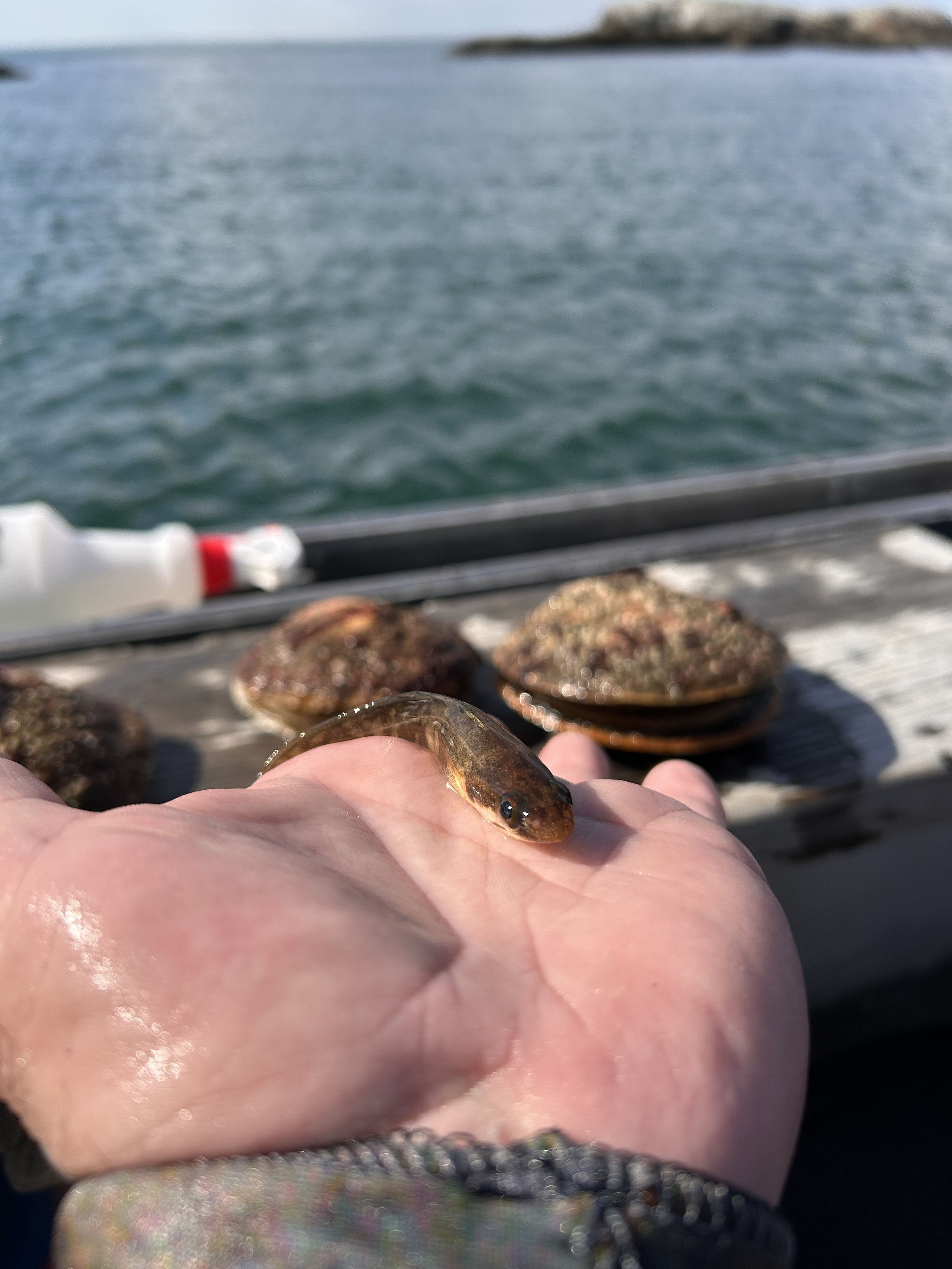
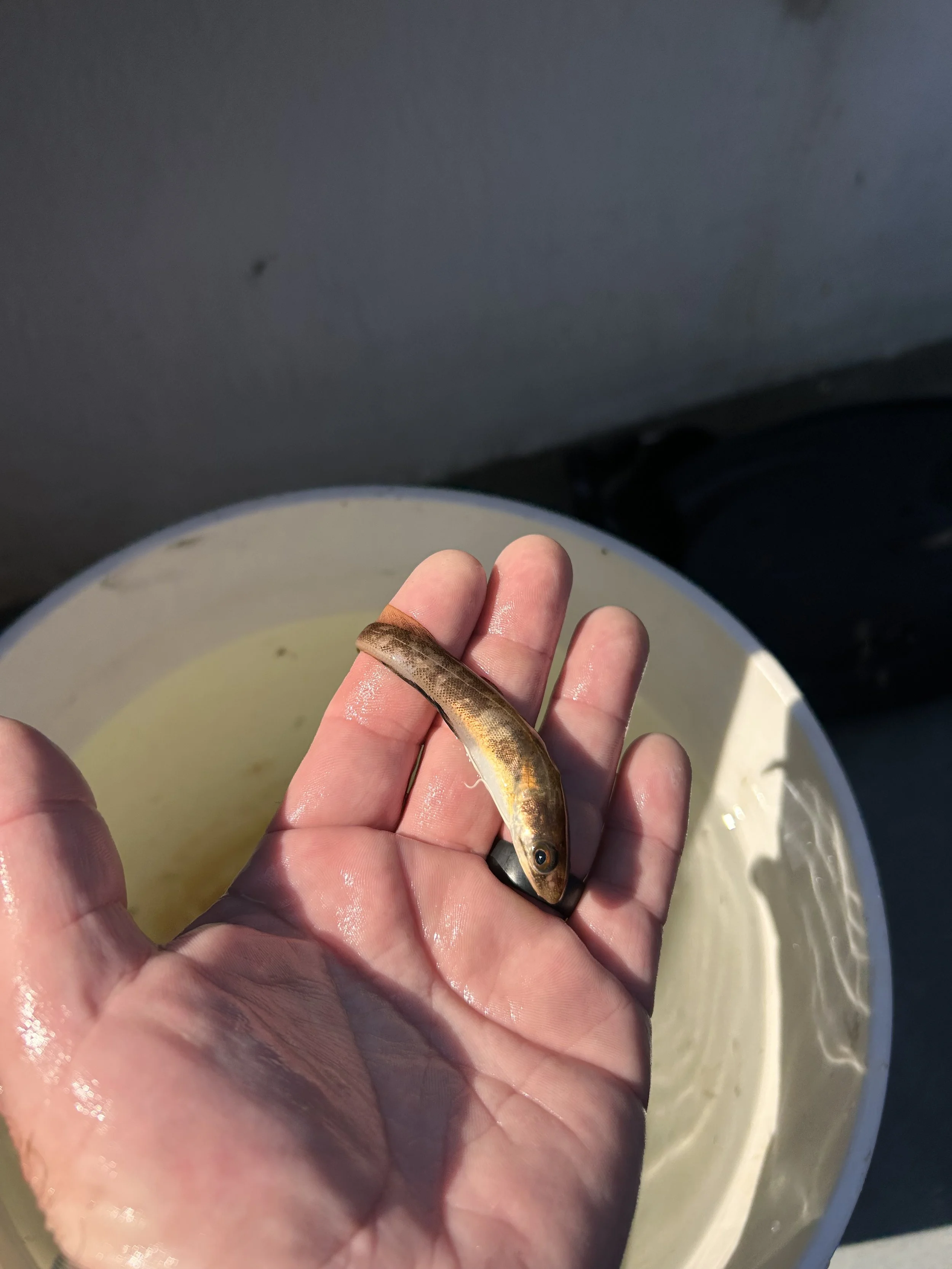
Red Hake can grow up to about 30in / 75cm weighing up to 3.5kg / 8lbs and live on average up to 8 years but have been recorded living to 14! Their appearance can vary in color depending on their environment. Most tend to be a reddish brown to olive-brown color with pale tan spots on their sides and shades of white and translucent on the belly. Being related to cod they have a barbel (whisker) on their chin. Feeding on crustaceans like shrimp primarily, they also eat squid and other fish, changing seasonally to support breeding. The mating season is May through November with females laying between 500,000 and 2million eggs which the males then fertilize before floating near the surface and hatching after a few days to survive off a yolk sac at first until able to feed on small crustaceans. Its primary predators are spiny dogfish, cod, goosefish, and silver hake, a bigger species of hake often referred to as Atlantic whiting.
Fisheries
The red hake fishery in the U.S. operates from Maine to Cape Hatteras, North Carolina and is a part of the small-mesh multispecies fishery, which is managed primarily through a series of exemptions from the Northeast Multispecies Fishery Management Plan (or groundfish fishery). The directed commercial fishery is conducted with small-mesh trawl gear with a number of specific requirements to reduce bycatch of larger groundfish species. There are two stocks of red hake (northern and southern) which are managed accordingly. The market for small-mesh multispecies is human consumption and as bait. U.S. wild-caught red hake is a smart seafood choice because it is sustainably managed and responsibly harvested under U.S. regulations. Implementing regulations are found at 50 CFR part 648 subpart F.
Population
The northern stock is not overfished. The southern stock is overfished, but the fishing rate established under a rebuilding plan promotes population growth.
Fishing Rate
The northern stock is not subject to overfishing. The southern stock is reduced to end overfishing.
Scientific Classification
Kingdom Animalia
Phylum Chordata
Class Actinopterygii
Order Gadiformes
Family Phycidae
Genus Urophycis
Species chuss