North End
Old North Church
Pirate Tunnel
CG Sector Boston
Molasses Flood
Charles River & Locks
Old North Church
Breaking a military curfew on April 18, 1775, two men (church sexton, Robert Newman, and vestryman, Captain John Pulling, Jr.) climbed to the steeple of the Old North Church to light two lanterns as a pre-determined signal agreed upon by the colonists. Two lanterns signaled to a network of riders including Paul Revere, that the British troops were approaching by way of sea, crossing the Charles to seize stockpiled supplies and weapons from the colonists. This is where the famous saying “One if by Land, Two if by Sea” comes from.
What is now the Old North gift shop used to be a chapel for Italian immigrants built in 1918
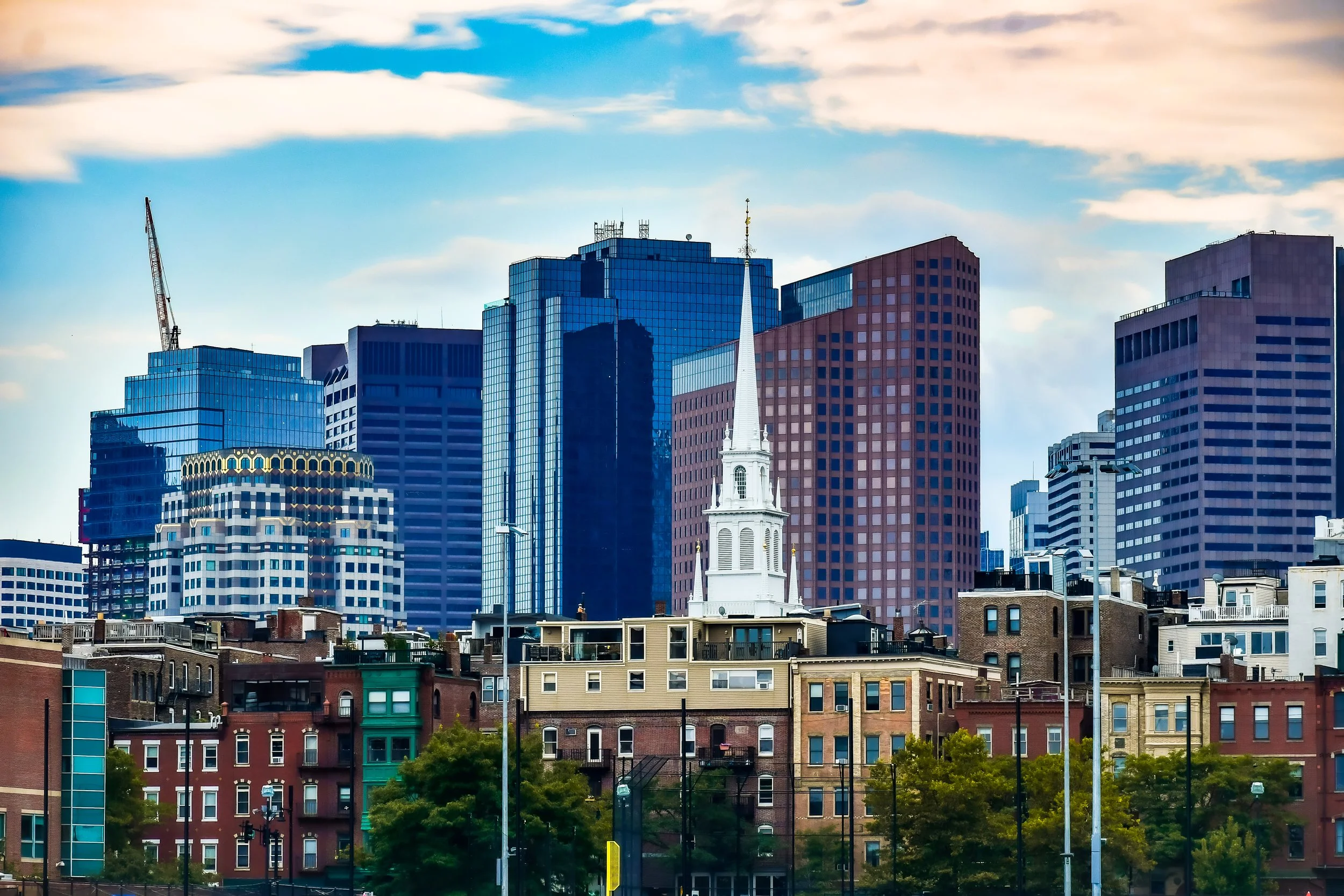
The Old North Church (officially Christ Church in the City of Boston) is an Episcopal mission church built in 1723 and is the oldest standing church building in the city and a National Historic Landmark.
Boston's second Anglican Church and choice for Boston's younger merchants and privateers, King's Chapel was the original and frequented by Boston's wealthy elite.
In 1743 a trial for a mutiny aboard the Rising Sun merchant ship, exposed some of Boston's merchants to be involved in a smuggling ring organized by Old North donor Gedney Clark, a Massachusetts born merchant residing in Barbados.
Merchant and smuggler Gedney Clark and slave merchant Peter Faneuil each donated 100 pounds for the purchase of the church's bells, being the two largest individual contributions made to the Old North Church
Historian Jared Ross Hardesty characterized the church's role within the greater Atlantic world and in Boston: "Much like they laundered cacao through Barbados to make it a 'legal' commodity, the men laundered their reputations through Old North, signaling that they were upstanding men of commerce who gave back to the community that supported their activities.”
Those upstanding merchants of Boston traded goods and trafficked enslaved African peoples throughout the Caribbean in exchange for cacao from Dutch colonies, at which point the cacao was transferred to the British colony of Barbados. Merchants would launder the cacao through Barbados as way to make it a "British" product, since the British were prohibited from trade with foreign empire’s. The “washing” allowed merchants to re-export the cacao to London, with a percentage being smuggled back to Boston.
During the Battle of Bunker Hill General Thomas Gage, the overall commander of British Forces in North America and Military Governor of Massachusetts Bay would direct and oversee the battle not from Charlestown where Bunker Hill is, but the steeple of the Old North Church which back then had an unencumbered view of the battlefield
Legend tells that following the brutal battle of Bunker Hill, British troops used the church as a field hospital for the wounded and dying. Its said that around one hundred British soldiers are buried in the crypt, including Gage’s second-in-command, Major John Pitcairn.
In spring of 1912, the church underwent a reconstruction to align more with the simple Puritan style of other churches in early MA history. The intent was to restore the church to how the Founding Fathers would have seen it, mistakenly assuming it adhered to the plain Puritan style popular in the era. The original floor timbers and gallery stairs were replaced. The box pews, which had been deconstructed to make room for slip pews in 1806, were reconstructed along with the raised pulpit. The interior woodwork was "incorrectly painted white, rather than in the rich variety of colors that have been described in early texts of the church.” Nonetheless the church re-opened December 29, 1912 for the 189th anniversary of its first service with Theodore Roosevelt in attendance, seated in pew #25
Owning a pew made those owner's church proprietors and gave them a vote in all church matters but if owners fell behind on their weekly contributions, the church reserved the right to sell their pew.
The church had two pews in the back of the center aisle designated for "Wardens and Strangers" possibly to entice non-members to join the congregation.
The existing organ was built by Thomas Johnston and installed in 1759.replacing the previous organ obtained in 1736.
The four angels surrounding the current organ were captured during King George’s War in 1746 from a French ship by Captain Thomas Gruchy before being donated to the Church. Thomas Gruchy owned pew #25.
The original steeple of the Old North Church was destroyed by the 1804 New England hurricane in October 1804, finally being rebuilt when enough funds were procured two years later. It is capped by the same weathervane that adorned the top of the first spire.
Eight bells (tenor: 13 long cwt 3 qr 5 lb (1,545 lb or 701 kg) in F) at Old North Church were cast by Abel Rudhall in Gloucester, England, in 1744 and hung in 1745.
One of the bells has the inscription: "We are the first ring of bells cast for the British Empire in North America, A.R. 1744." The bells were restored in 1894 and in 1975. They are maintained and rung regularly by the Massachusetts Institute of Technology Guild of Bellringers.
There are an estimated 1,100 bodies buried in 37 tombs in the basement. The crypt was used between 1732 and 1860, each tomb is sealed with a wooden or slate door. However, many doors have been plastered over as ordered by the city of Boston in the 1850s.
The 175-foot-tall, three-tiered spire was the tallest structure in Boston until the 217-foot Park Street Church steeple surpassed it in 1809
September 13, 1757, John Childs the “flying man” of Boston strapped an umbrella-like feathered glider connected by rope and jumped from the spire. He landed safely several hundred feet away setting a record as the first known flight in America.
Pirate Tunnel
Some of the long lost stories of Boston could very well be those of the pirate smuggler’s tunnels of the North End and the those surrounding Captain Thomas Gruchy. It was in 1741 that a mysterious, successful English businessman arrived in Boston by the name of Thomas J. Gruchy. Purchasing pew #25 in the Old North Church and becoming a regular figure in the North End, Gruchy started mingling with upper class merchants and adventurers. With his persuasive talk and polished manners, in 1744 he found his way into being 1/16th owner and named Captain of a ship Queen of Hungary, the other owners being figures such as John Rowe (Rowe’s Wharf). During the time the War of Austrian Succession/King George’s War, Gruchy received a Letter of Marque, becoming a privateer and spent most of 1744 at sea attacking French and Spanish vessels making a considerable profit. With his new found wealth he purchased a large, luxurious mansion in the North End previously owned by Governor Spencer Phips. Gruchy had a bold and active social life engaging heavily with the church and community. He was known to throw lavish parties and festivities becoming a very popular figure and talk of the town. Gruchy is well known for donating several artifacts and religious “privateering prizes” to the Old North Church including Spanish chandeliers, a cross, French wooden angels and cherubic figures, some of which are still on display today.
Late one autumn, rumors came in from the North End waterfront of some unusual activities taking place. During the high spring tides two massive ships called ‘hulks’ were brought ashore near Gruchy’s wharves into two previously prepared depressions. Sailors and workmen then build a wooden privacy barrier to obstruct public view. Behind the secrecy of their privacy screen work was immediately started excavating a fourteen foot wide arched brick tunnel from the beach. The tunnel would lead under the wharfs and streets directly to the basement of Governor Phips mansion. Once the work was finished, the ships and sailors left the harbor only to precede mysterious vessels enter the harbor under the cover of darkness and anchoring off that same location. The vessels would then send out rowboats with muffled oars which at high tide could row right into the tunnel itself before being unloaded at a leisurely pace.
By the end of the 1740s Gruchy had a fair amount of legal trouble, seeing himself in court numerous times disputing claims of unpaid prize money from the privateering voyages. The Captain battled a slew of plaintiffs every year and even partner John Rowe had turned competitor. By this time Gruchy had started trying to make his living on land and in attempt to increase his fortunes by getting into distilling rum from molasses, he instead started building debts. In 1758, Gruchy arranged the sale of his mansion to his father-in-law and by 1759 had vanished, disappearing completely from Boston and the records. There were whispers that he had been caught and killed at sea but no definite news was ever confirmed. He had no offspring and left no will. Without the man to defend himself, Gruchy’s reputation began to tarnish. Persons who had complaints against him, either in court or in business, speculated on the legality of his practices. The beautiful Phips Place mansion was torn down by the mid 1800s where townhouses and tenements took their place. What he left behind were four wooden angels, two chandeliers and some tunnels under the North End. The distillery Gruchy attempted to build, the wharves and docks, and his land holdings on Copp’s Hill became private and public property with no trace of his life and his career.
Sometime between 1875 and 1890 parts of the tunnel were exposed while laying new pipes under Commercial St. The last reports of entering the tunnels came from historian and author Edward Rowe Snow circa 1940s when he was led to the basement of the Nathan Tufts Meter Company. The building’s eighty year old security guard brought him to a manhole that had presumably not been opened in nearly 30 years. Once inside the dark, cobweb filled void, Snow reported it was a 14-15ft wide brick, arched section located diagonally across the street from “Henchman’s Lane” and Commercial St. in just the right placement and direction. It’s hard to say if the tunnel is still there or still being used since what now stands in the place of the location Snow reported, which also occupies the waterfront is US Coast Guard Sector Boston.
US COAST GUARD SECTOR: BOSTON
A Sector is a shore-based operational unit of the United States Coast Guard
The Coast Guard was originally the Revenue Marine and the Revenue Cutter Service from August 4th, 1790, when the first Congress authorized the construction of ten vessels to enforce tariff and trade laws and to prevent smuggling
Under an act of Congress in 1915, the Revenue Cutter Service merged with the Life-Saving Service. The nation then had a single maritime service dedicated to saving life at sea and enforcing the nation's maritime laws
1939 President Franklin Roosevelt ordered the transfer of the Lighthouse Service to the Coast Guard
1946 Congress permanently transferred the Bureau of Marine Inspection and Navigation to the Coast Guard, thereby placing merchant marine licensing and merchant vessel safety under their authority.
1967 Coast Guard takes over the administration of bridges over navigable waterways
One of the oldest Federal Government organizations, the US Navy Department was established in 1798, making the US Coast Guard service technically the first armed forces afloat.
The first commissioned cutter in the Revenue Cutter Service, the MASSACHUSETTS, was built in Newburyport in 1789, made berth in Boston, and was commanded by Boston-born John Foster Williams; his final resting place is in the North End within sight of the Sector.
Fabled lifesaver, Joshua James, served in the surfboat services from 1841 starting at age 15 until his death in 1902 at the age of 75; he was personally credited with over 200 lives saved. He received command of the Point Allerton Lifesaving Station in Hull, Massachusetts in 1889 at age 62 and died on the beach after drilling with his hand-rowed surf boat crew. During his 13-year command, his station was credited with 540 lives saved.
Boston Light was ceded to the United States government in 1790 and made part of the U.S. Coast Guard in 1942. It is the only remaining permanently manned light house in federal service. The light has now been automated since 1998. In 2003, Dr. Sally Snowman became the first civilian keeper since 1941 and the first female keeper of Boston Light, under the auspice of the Coast Guard. After 20 years, Dr. Snowman retired in 2023. Snowman served as the last official lighthouse keeper in the United States.